
Building
Science
Environmental analysis is useful when the model inputs, comparison and design consequence can be inspected.
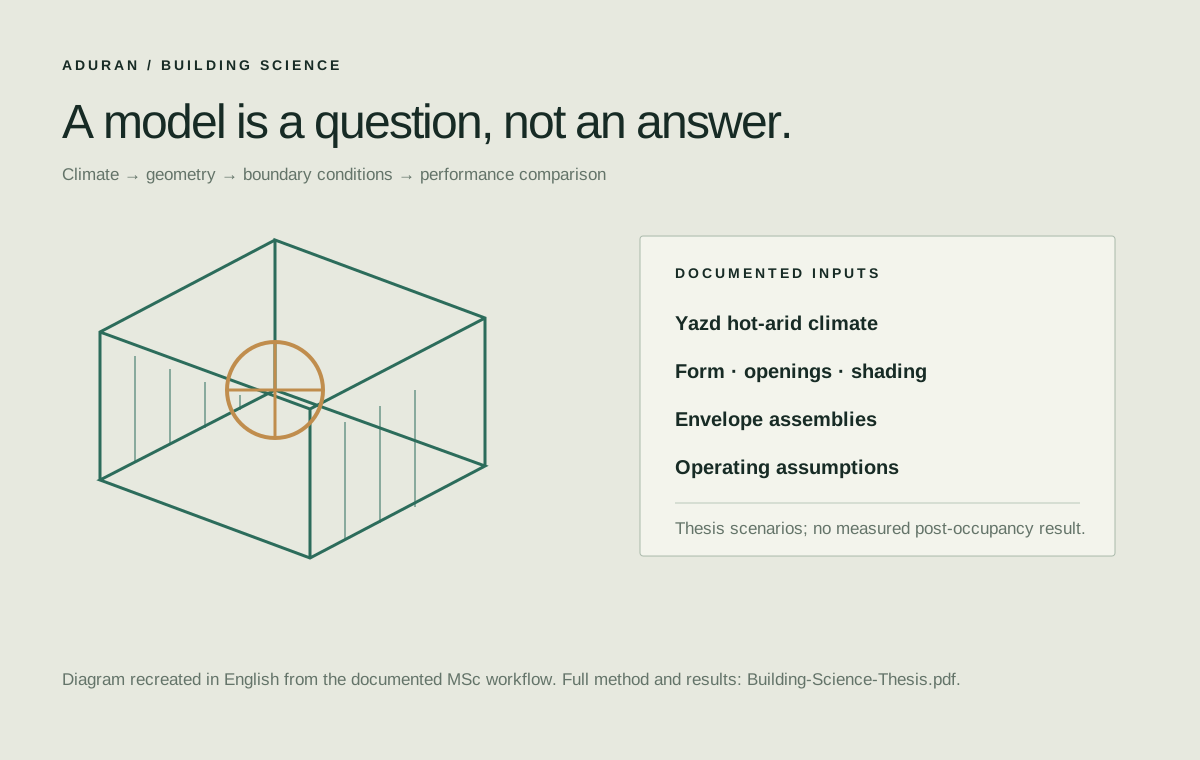
The problem
A convincing rendering does not establish thermal or daylight performance. Climate, geometry, schedules, material assemblies and comparison basis all affect the answer.
My role
I studied climate and built simulation workflows using Ladybug/Honeybee, Radiance, EnergyPlus, DesignBuilder, DIALux and related tools, documented in the thesis and coursework.
The output
A completed MSc study plus original model and output evidence. Quantitative findings are scoped to their modeled scenarios, not a built building's measured energy use.
Make the inputs
visible.
The research sequence begins with climate data, then builds rooms and boundary conditions, tests daylight and energy, and compares complete design packages. A result is only useful when its assumptions and units remain attached.
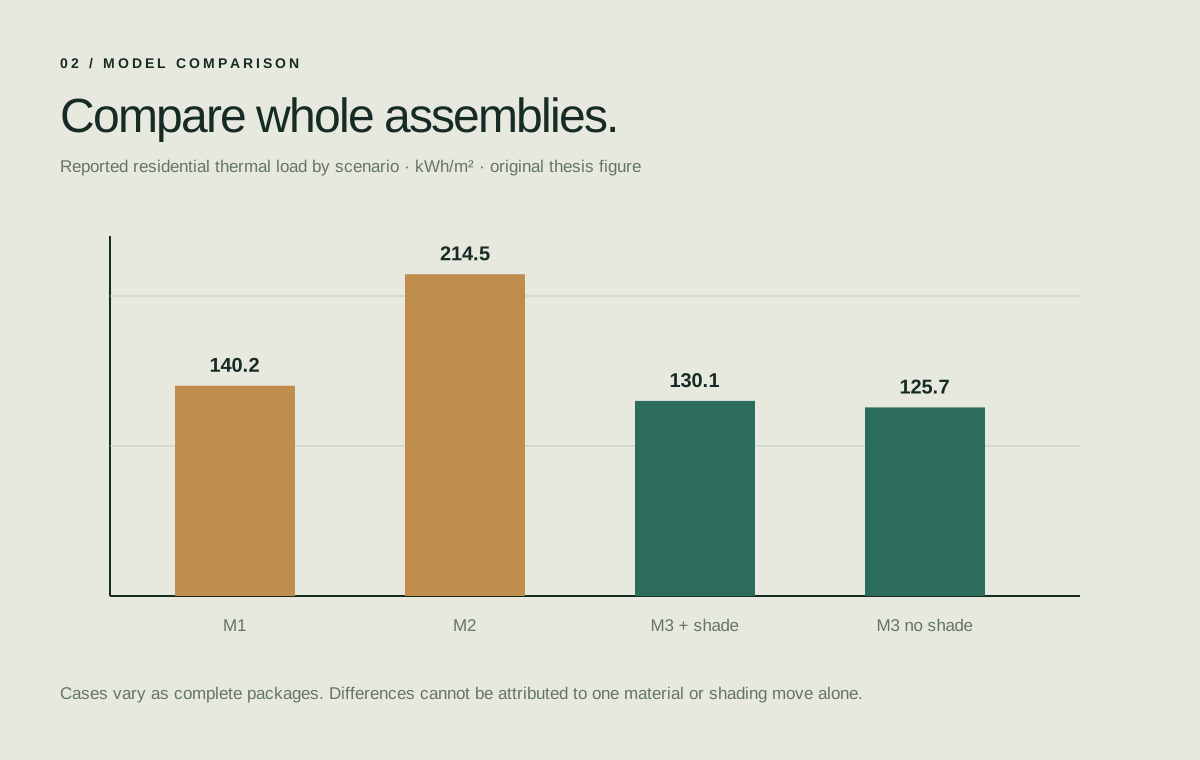
Combined residential thermal load in the modeled thesis comparison. Cooling fell 43.92%; heating rose 61.09%. The combined result uses the underlying loads, not the average of those two percentages. These are simulation results, not utility savings.
Inspect source context ↗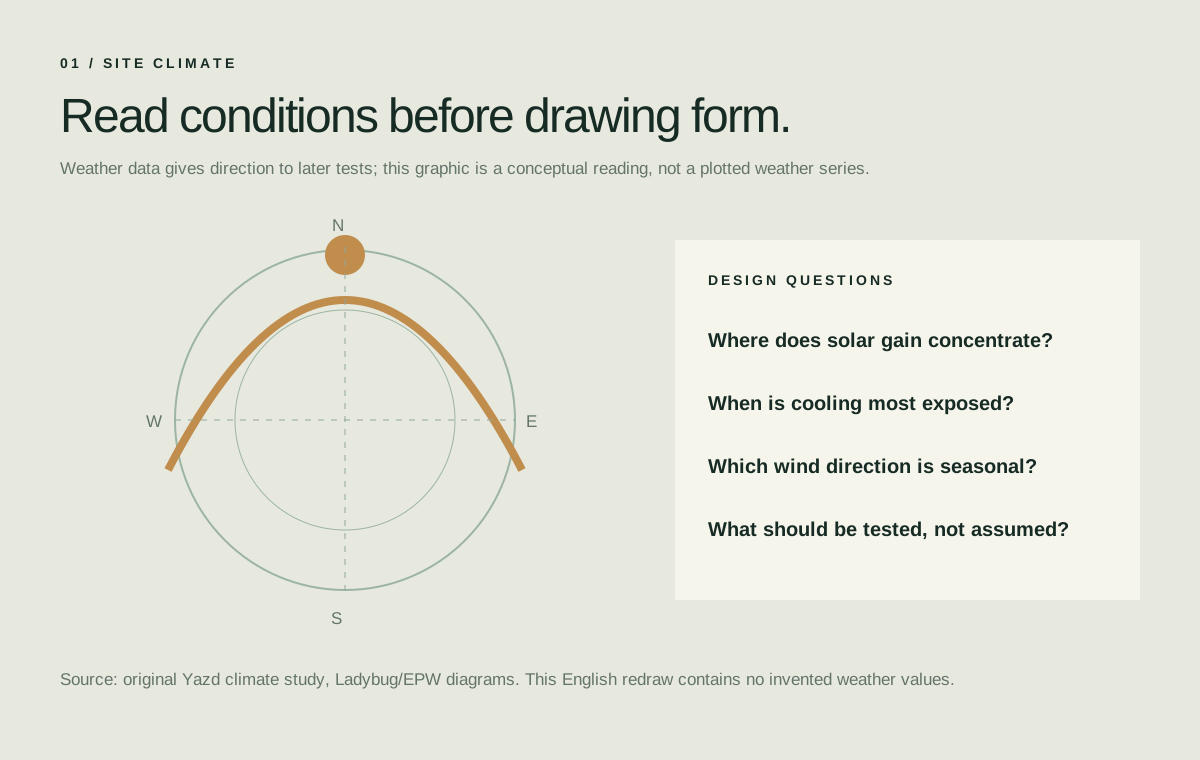
Read the study.
- The thesis is a modeled hot-arid design study, not measured post-occupancy energy.
- Energy values are scenario results with stated geometry, weather, envelope and operational assumptions.
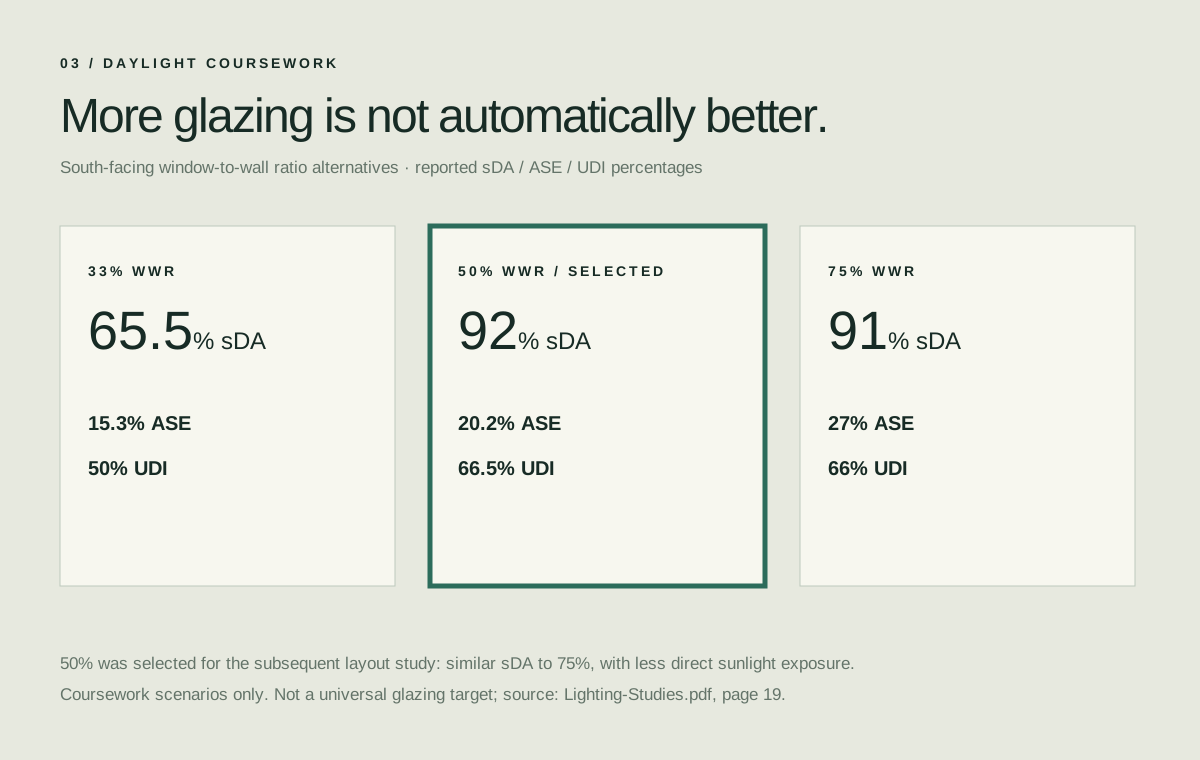
- Daylight and lighting coursework are distinct studies; their metrics are not transferred onto the thesis building.
- PV sizing and uncertainty are presented as modeled estimates, not installed-system yield.